



Pole Grip for Beginners: Why Skin Contact Matters and What Affects Grip
When beginners say, “I have no grip,” they often mean their hands keep sliding. But pole grip is not one thing and it is not located only in your hands. Depending on the move, staying connected to the pole can involve your hands, thighs, knees, arms, side of the body and other contact points.
Good grip is a combination of appropriate friction, correct contact, body position, technique and enough strength for the movement. Understanding those pieces is more useful than simply squeezing harder.
If you are returning after time away, your first session may feel less familiar than you expected. Our guide to returning to pole after a break will help you plan a gradual restart with your instructor.
Why skin contact matters on a pole
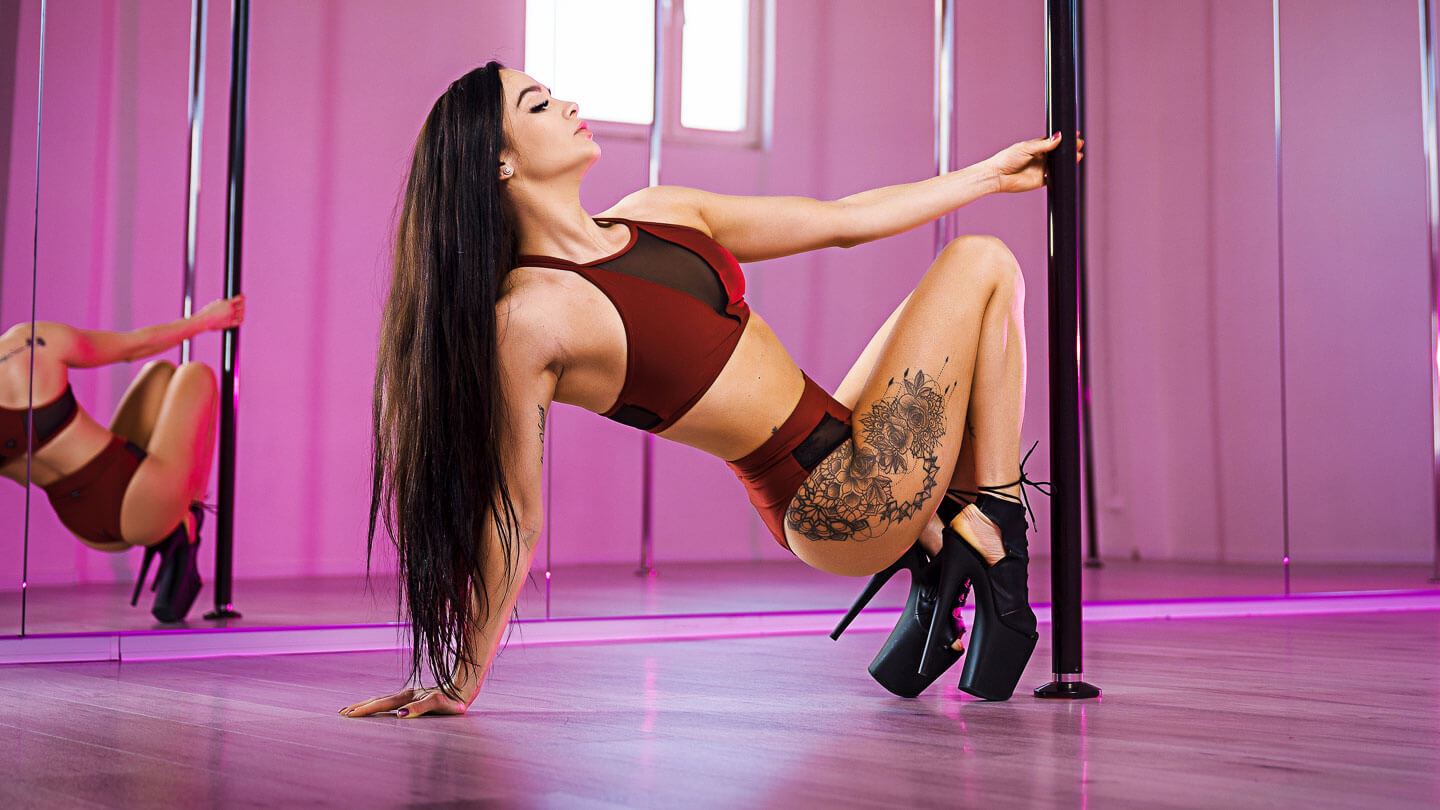
On a conventional metal dance pole, direct skin contact creates friction. Smooth fabric between the body and pole usually reduces that friction, which is why shorts and fitted tops are standard for many grip-based skills.
X-POLE’s own XPERT Pro guidance tells users that pole work needs friction created by skin contact and recommends keeping arms and legs uncovered for conventional finishes. It also notes exceptions such as silicone and powder-coated poles, which behave differently.
That is the practical reason behind very short polewear: not “less clothing is always better”, but “do not cover the contact point a move actually needs”. Our article on why pole dancers wear tiny shorts explains that clothing question in more detail.
Hand grip and body grip are not the same thing
Your hands are important, but many pole skills depend on multiple points of contact. Depending on the technique, an instructor may cue the inner thighs, the back of the knee, the upper arm, the armpit area, the side of the torso or another part of the body.
You do not need all of these in your first lesson. The point is that a slippery move is not automatically a “weak hands” problem. Before trying to squeeze harder, check which body parts are supposed to be creating contact in that specific move.
What can affect pole grip?
1. Lotion and body oil
Start by checking what is on your skin. Oils and lotions can transfer from skin to the pole and make the surface slippery. X-POLE explicitly warns against using them before pole. If you have class later in the day, be careful with moisturiser on the areas you expect to use for grip and follow your studio’s instructions.
2. Sweat and moisture
Sweat can reduce hand friction for many dancers, although the amount and the solution vary from person to person. Wiping hands and the pole as permitted by the studio is often the first step. Some dancers use drying grip products, but they are not necessary for everyone.
3. Very dry skin
Grip problems are not limited to sweaty skin. If your skin is already very dry, adding a strong drying product may not address the problem. Ask your instructor to help you assess the contact and check the product’s intended use before buying it.
4. Pole material, finish and conditions
Chrome, stainless steel, brass, powder-coated and silicone poles do not all feel the same. Temperature and studio conditions can also change how a familiar pole feels. A grip solution that works on one surface may be unnecessary or unsuitable on another.
5. Technique and body position
More friction cannot fix a contact point that is in the wrong place. If a sit, climb or hold keeps slipping, ask the instructor to check your positioning before assuming you need stronger hands or more grip aid. Small changes in where and how the body meets the pole can matter more than adding another product.
What should beginners wear for grip?
Expose the skin that the class actually needs and keep the rest of your outfit comfortable. For many beginner sessions, fitted shorts and a secure fitted top are enough. You do not need the smallest possible outfit before your syllabus requires additional contact points.
If you are choosing shorts, focus on whether they stay in place and leave the required upper-thigh contact available. Our pole shorts guide covers rise, coverage, fit and grip access in detail. You can also browse pole dance shorts designed for movement and skin contact.
For a mid-rise cut, compare Mandy shorts. If you prefer a high waist with adjustable leg length, Emma’s side drawstrings let you change how much of the thigh is exposed. In both cases, check the contact points for your own class; ordinary fabric does not replace skin grip.
What about grip aids?
Grip aids can be useful, but “grip aid” is a broad category. Some products are designed mainly to reduce moisture; others add tack. A product that helps sweaty hands can be the wrong choice for someone whose skin is already very dry.
Before using one:
- Identify whether your main issue is sweat, dry skin, technique or a particular pole surface.
- Check your studio’s rules. Some products leave residue or are not allowed on certain poles.
- Use the product as directed rather than applying more every time something slips.
- Clean the pole according to the studio or manufacturer’s guidance.
Grip aid should support appropriate technique, not replace it.
A simple grip troubleshooting order
- Check products on your skin. Lotion or oil is an obvious place to start.
- Check the required contact points. Is fabric covering a thigh, knee or side of the body that should be on the pole?
- Check body position with your instructor. Make sure the move is being set up correctly before changing equipment.
- Check sweat and the pole surface. Wipe as your studio permits.
- Only then consider a suitable grip aid. Choose it for the problem you actually have.
This order helps avoid a common beginner mistake: treating every slip as proof that you need stronger grip product or stronger hands.
Why “more grip” is not always the goal
Pole requires enough friction for the skill, not maximum stickiness in every situation. Some spins and transitions deliberately involve controlled movement around the pole, while other holds require much more secure contact. Different pole finishes also change the equation.
Follow the technique your instructor is teaching rather than chasing the grippiest possible feeling.
FAQ
Why do my hands slide on the pole?
Common possibilities include sweat, lotion or oil, pole surface and temperature, technique, body position and strength. There is no single cause, so check the simple variables before assuming your hands are the problem.
Do I need grip aid as a beginner?
Not automatically. Ask your studio first. You may not need one, and if you do, the right type depends on whether you are dealing with moisture, dry skin or another issue.
Are shorts necessary for pole grip?
Shorts become useful when a movement needs direct contact from the upper thighs or other areas that longer clothing would cover. Some first classes need that contact immediately; others do not. See our guide to what to wear to your first pole class.
Is stronger hand grip the answer to every slipping move?
No. Many pole skills rely on body contact and positioning as well as hand strength. Ask which contact points the move should use and have your technique checked.
Can I use body lotion if I apply it hours before class?
Studio policies differ, and residue can remain on the skin. The safest practical rule is to follow your studio’s guidance and avoid oil or lotion on grip areas before pole.


Leave a comment