

How to Choose Pole Dance Shorts: Coverage, Rise, Grip and Fit

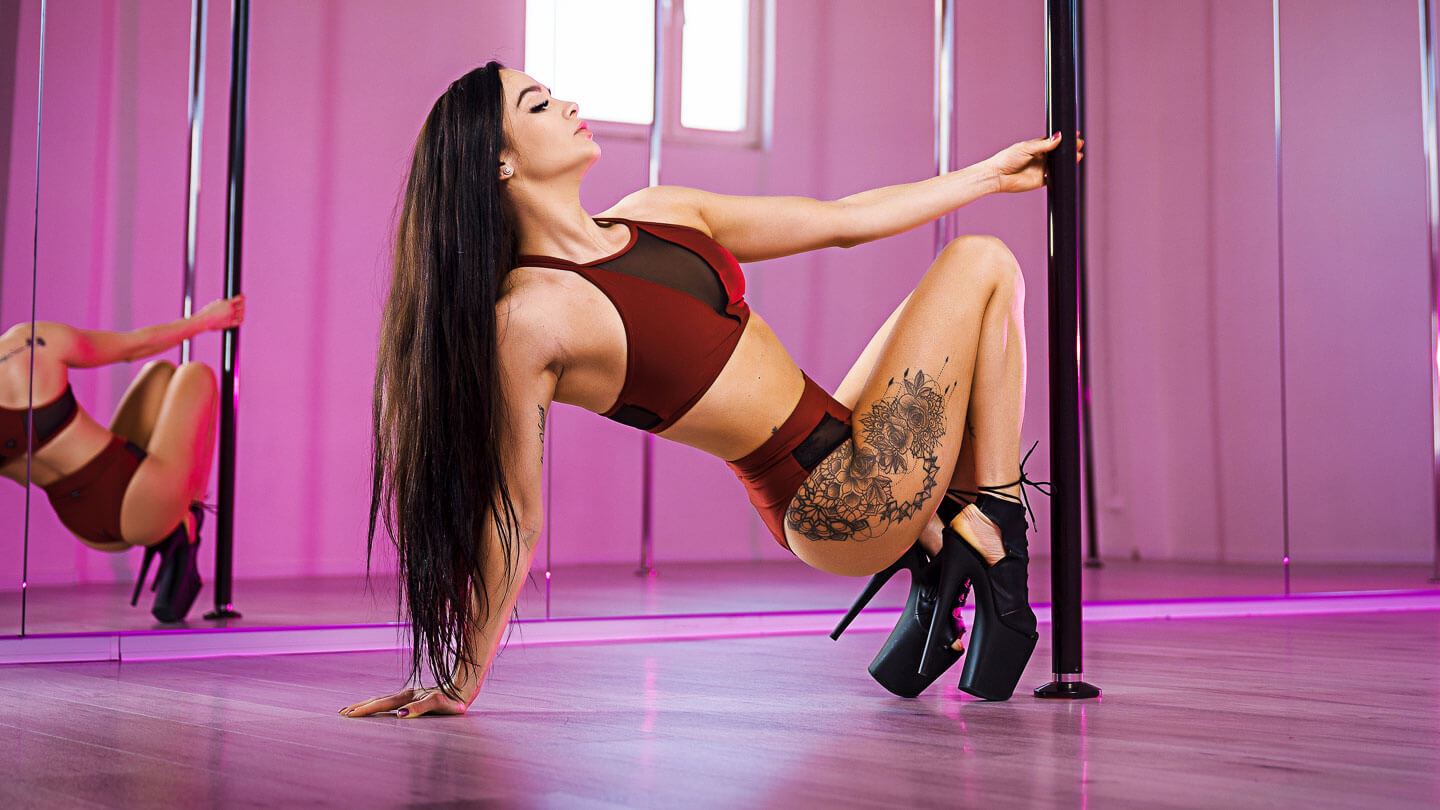
The best pole dance shorts are not simply the shortest pair you can find. A good pair should expose the skin you need for grip, give you enough coverage to move confidently, and fit closely without restricting your range of motion.

In short: the right pole shorts are the ones that let you focus on the pole, not on adjusting your outfit halfway through a combo.

Your ideal pair depends on four main factors:

  • the grip points you need to access;
  • the amount of front, side and back coverage you prefer;
  • the rise that suits your body and training style;
  • how the shorts behave when you squat, climb, invert and open your legs.

This guide explains how to choose pole dance shorts by function first, then style. Because yes, they should look great too. But they have a job to do.

At Dragonfly, that job is simple: your shorts should stay close, feel comfortable and let you train without thinking about them every few minutes. Held, not squeezed. Secure, not stiff.

1. Start with the grip points you need

Many pole techniques rely on direct contact between the skin and the pole. Clothing placed between your body and the pole can reduce that contact, which is why fitted pole shorts are usually more practical than long or loose bottoms once a class moves beyond basic spins and conditioning.

That does not mean every pole dancer needs the smallest possible shorts.

The amount of exposed skin you need changes according to the movement. Inner-thigh contact is important for many sits, climbs and holds. Some techniques also use the sides of the hips, waist or upper legs. A beginner class may require less exposed skin than an advanced tricks session.

Choose shorts that expose the areas your current training requires, without going beyond what feels comfortable for you.

A practical grip rule

Your pole shorts should allow access to the upper inner thighs without fabric bunching between your skin and the pole.

For movements that use the side of the hip or waist, check that the waistband and side panels do not cover the exact contact point. This can be especially relevant with high-waisted pole shorts, although the result depends on the waistband height and your torso length.

One important note: clothing alone does not make a movement secure. Correct technique, instruction and appropriate progression are always essential.

2. Choose the right rise

Pole shorts are usually described as low-rise, mid-rise or high-waisted. These terms are not perfectly standardised across brands, so always check product photographs and measurements rather than relying on the name alone.

Low-rise pole shorts

Low-rise pole shorts sit lower on the hips and leave more of the waist and sides exposed.

They can be a good choice when:

  • you regularly use your waist or sides for grip;
  • you prefer less fabric around your stomach;
  • you like a more minimal polewear silhouette;
  • a high waistband feels restrictive on your torso.

The trade-off is reduced abdominal coverage. With low-rise designs, front and side construction matter especially because the shorts need to stay secure through dynamic movement.

Mid-rise pole shorts

Mid-rise shorts sit between low-rise and high-waisted styles. They often provide more coverage around the lower abdomen while leaving much of the waist accessible.

They can be a practical option when:

  • you want more coverage than classic hot pants provide;
  • you do not want a waistband reaching the natural waist;
  • you train a mixture of spins, tricks and choreography;
  • you are still discovering which rise feels most comfortable.

For many dancers, mid-rise pole shorts offer a useful balance between coverage and access to common grip points.

High-waisted pole shorts

High-waisted pole shorts cover more of the abdomen and may create a more secure, supported feeling.

They can work well when:

  • you prefer greater stomach coverage;
  • you feel more confident in a higher waistband;
  • you want a longer visual line through the waist;
  • the waistband remains below the skin contact points required for your training.

However, "high-waisted" can mean very different things from one design to another. On a shorter torso, the same pair may reach much higher than it does on a taller dancer. Before buying, check where the waistband sits on the model and compare the model's proportions with your own.

If possible, look for the front-rise measurement rather than relying only on photographs.

3. Evaluate front, side and back coverage separately

Coverage is not a single measurement.

Two pairs of shorts can look equally cheeky from behind while providing very different front or side coverage. When assessing pole dance shorts, consider each area separately.

Front coverage

The front should remain comfortable when you squat, straddle and lift your legs.

Check:

  • the width of the front panel;
  • the position of any centre-front seam;
  • whether the fabric becomes overly narrow when stretched;
  • whether the leg openings pull the material away from the centre.

A design that looks secure while standing may behave differently during a wide straddle, so movement matters more than the mirror.

Gusset and crotch construction

The gusset is the fabric panel positioned through the crotch. Its shape, width and lining can affect comfort and coverage, but these details are not always visible in standard product photographs.

Useful product information may include:

  • whether the crotch is lined;
  • whether the lining covers the entire relevant area;
  • where the seams are positioned;
  • whether the front panel narrows significantly toward the crotch.

Do not assume that every pair of pole shorts has the same gusset construction simply because the outer silhouette looks similar.

Dragonfly pole shorts are designed with a double-layer gusset and guaranteed intimate coverage. That means the crotch and intimate areas stay safely covered, even when the back cut is cheeky or more revealing.

Side coverage

The side cut affects both mobility and access to the upper thighs and hips.

A higher side cut can expose more skin for grip but may provide less coverage during open-leg positions. A lower side cut provides more coverage but can place fabric over a contact point.

Adjustable side drawstrings can offer more flexibility because they allow you to alter the effective leg length and side coverage.

Back coverage

Back coverage is commonly described as full, classic or cheeky, but these labels also vary between brands.

This is different from intimate coverage. A cheeky back cut shows more of the glutes, but it should not mean less security at the front or through the crotch.

Pay attention to:

  • how much of the glutes the fabric covers;
  • whether the material shifts inward during movement;
  • the shape of the leg opening;
  • how the shorts look in a squat, not only while standing.

Choose the level of coverage that lets you concentrate on training instead of repeatedly checking your outfit.

4. Check the fit in motion

Pole dance shorts should fit close to the body. Loose fabric can shift, fold or cover skin unpredictably, while an excessively tight pair can restrict movement or create uncomfortable pressure.

The size is probably too large if:

  • the waistband gaps away from the body;
  • the fabric wrinkles significantly around the crotch;
  • the shorts move independently of your body;
  • the leg openings shift position during basic movement.

The size or cut may be too small if:

  • the waistband creates painful pressure;
  • the leg openings dig sharply into the thighs;
  • the fabric pulls excessively across the crotch;
  • your normal range of motion feels restricted;
  • the shorts move upward because they are being pulled toward a narrower part of the body.

A pair can match your hip measurement and still be the wrong cut for your proportions. Waist-to-hip ratio, thigh circumference, rise and torso length can all affect the result.

5. Use a movement test, not a mirror test

Do not judge pole shorts only by how they look while standing.

When trying them on, perform a short movement check:

  1. Raise both arms overhead.
  2. Complete a deep squat.
  3. Lift each knee toward your chest.
  4. Open into a wide straddle within your comfortable range.
  5. Sit on the floor and move through a basic floorwork transition.
  6. Check the front, sides and back again.
  7. Notice whether you instinctively adjust the waistband or leg openings.

You do not need to perform an unsupported inversion to test a new pair. The aim is to see how the garment responds to changes in hip position, leg separation and torso length.

If the shorts require constant adjustment during this simple test, they are unlikely to become less distracting during a demanding class.

6. Consider your body proportions

Clothing size alone does not describe body shape.

Two dancers with the same hip circumference may have different:

  • waist measurements;
  • thigh circumferences;
  • torso lengths;
  • waist-to-hip ratios;
  • preferred levels of compression.

Smaller waist and wider hips

When choosing a size for shorts, the hip measurement is often the most important starting point because the garment must accommodate the widest area. However, a design that fits the hips may still gap at the waist.

Look for:

  • a waistband that follows the body closely;
  • sufficient stretch through the hips;
  • leg openings that do not create excessive pressure;
  • product reviews from dancers with similar proportions.

Do not size down automatically to eliminate a waist gap. Doing so may make the hips, crotch or thighs too tight.

Stronger thighs

A tight leg opening can dig in or cause the shorts to move upward. Compare your thigh measurement with garment measurements when these are available, especially with styles that have a defined band or elastic around the leg.

Shorter torso

A high waistband may sit much closer to the ribcage on a shorter torso. Mid-rise shorts may provide a similar visual effect while leaving more of the waist available.

Longer torso

A waistband described as high-rise may appear closer to mid-rise on a longer torso. Product photographs are more useful when the model's height and worn size are provided.

7. Look beyond the fabric composition

Elastane content can indicate that a fabric stretches, but the fibre percentage alone does not tell you how the finished shorts will behave.

Construction, fabric weight, knit structure and direction of stretch also matter.

Dragonfly uses premium Italian performance fabric with LYCRA® fibre, chosen for exceptional stretch, shape retention and freedom of movement. The materials are OEKO-TEX certified, soft against the skin and made to keep working washing after washing.

For pole training, look for fabric that:

  • allows unrestricted hip movement;
  • stretches without becoming uncomfortably transparent;
  • returns toward its original shape after stretching;
  • feels comfortable against the skin;
  • does not create bulky folds at grip points.

Mesh, lace and velvet details should be evaluated separately from the main fabric. Decorative panels may have a different amount of stretch or a different surface feel.

For floorwork, also check the position of seams, buckles, rings, straps and other raised details. A feature that feels fine while standing may become uncomfortable when pressed against the floor.

8. Match the shorts to your training

There is no single best cut for every pole session. The right choice depends on what you train most often.

Beginner pole classes

Prioritise comfort and enough coverage to feel confident. At the same time, make sure the upper inner thighs can be exposed when your instructor introduces movements that require direct skin contact with the pole.

Technical tricks and inversion training

Focus on reliable front and side coverage, unrestricted hip movement and access to the skin contact points used in your current syllabus.

Choreography and floorwork

Check seams, hardware, decorative straps and textured materials in positions where your hips or thighs contact the floor.

Heels and exotic pole

Your preferred silhouette may be more minimal or decorative, but the shorts should still be tested during leg waves, floor transitions, splits and open-leg positions.

Performances and photoshoots

Consider the outfit from every viewing angle. Test it through the complete routine rather than assuming that a costume suitable for photographs will also work throughout a performance.

Competition rules vary between organisations and categories. A garment should not be described as competition-compliant unless it has been checked against the current rules of the specific event.

9. Use the size guide for the specific brand

Do not assume your size is identical across polewear brands, or even across every fabric and cut from the same brand.

Take fresh measurements and compare them with the current size chart. For shorts, measure the fullest part of your hips while keeping the tape horizontal and close to the body without pulling it tight.

When you fall between sizes, follow the recommendation for the specific product. Stretch, compression and cut can change the correct choice.

Dragonfly's general sizing advice recommends choosing the larger size when you are between two sizes, with a separate exception noted for compression shorts. Always confirm the guidance shown on the individual product page before ordering.

You can also check the Dragonfly size charts before choosing your pair.

10. Compare the actual design, not just the category name

Within the Dragonfly range, different constructions show why the details matter.

The Dragonfly pole shorts covered in this guide are developed specifically for pole dance, with a double-layer gusset, light comfortable support and guaranteed intimate coverage. What changes from model to model is the rise, side coverage, back coverage and styling.

  • Mandy and Hot Pants are mid-rise options for dancers who want a balanced waistband height and a classic polewear feel.
  • Emma is the most adjustable choice. Thanks to side drawstrings, it can be worn with a lower, mid or higher effective leg length and coverage, depending on how you style it.
  • Lola, Monica and Betty are high-waisted options for dancers who prefer more abdominal coverage and a supported feeling around the waist.
  • Mia is a low-waist, more revealing cut with a double-lined crotch area.

These differences are more useful than treating every pair simply as "pole shorts". The right choice depends on where you want the waistband to sit, how much back and side coverage you prefer, and which areas your training requires you to keep exposed.

If you want to compare different cuts in one place, explore the Dragonfly pole dance shorts collection.

Pole dance shorts checklist

Before buying, ask:

  • Does the cut expose the grip points I currently need?
  • Where will the waistband sit on my torso?
  • Is the front coverage sufficient in a wide straddle?
  • Is the crotch lined, and how is the gusset constructed?
  • Do the leg openings sit comfortably around my thighs?
  • Does the waistband gap, roll or create pressure during movement?
  • Are there seams or decorative details that could affect floorwork?
  • Is the fabric sufficiently stretchy and opaque?
  • Does the size recommendation apply to this exact cut and fabric?
  • Would I feel comfortable training without repeatedly adjusting the shorts?

Frequently asked questions

How short should pole dance shorts be?

Pole dance shorts should be short enough to expose the skin contact points needed for your training. For many pole techniques, this includes the upper inner thighs. They do not need to be more revealing than your movements require.

Are high-waisted shorts suitable for pole dancing?

Yes. High-waisted shorts can be suitable for pole dancing, provided the waistband does not cover a grip point needed for the movements you are training. The result depends on both the height of the waistband and your torso length.

Can beginners wear ordinary gym shorts?

Ordinary fitted shorts may be sufficient for an introductory class, especially during warm-up and basic spins. As training progresses, longer gym shorts may cover parts of the thighs or hips needed for direct contact with the pole.

Should pole shorts feel tight?

They should feel close and secure without restricting movement or creating painful pressure. Tightness alone does not guarantee a better fit. The cut must also suit your waist, hips, thighs and torso.

Should I wear underwear under pole shorts?

This is a personal choice and may depend on the construction and lining of the shorts. When wearing underwear, choose a design that remains fully covered during movement and does not create uncomfortable seams or visible edges.

The final decision

Choose pole dance shorts by function first and appearance second.

Start with the movements you train. Identify the skin contact points you need. Decide how much front, side and back coverage makes you feel secure. Then compare the rise, construction and size using photographs, measurements and a simple movement test.

The right pair should let you choose your silhouette without losing security. Most of all, it should let you focus on the pole, your technique and your progress - not on your outfit.

Explore Dragonfly pole dance shorts


Leave a comment

Please note, comments must be approved before they are published

This site is protected by hCaptcha and the hCaptcha Privacy Policy and Terms of Service apply.